
This past September, I turned 35.
In February last year, I lost my Dad.
Between then and now, I have spent a lot of time with my head bowed—living in the paradox of grief and loss. In this time, my ongoing exploration of life’s purpose and meaning has been anchored by my continued reflection on the life my father lived.
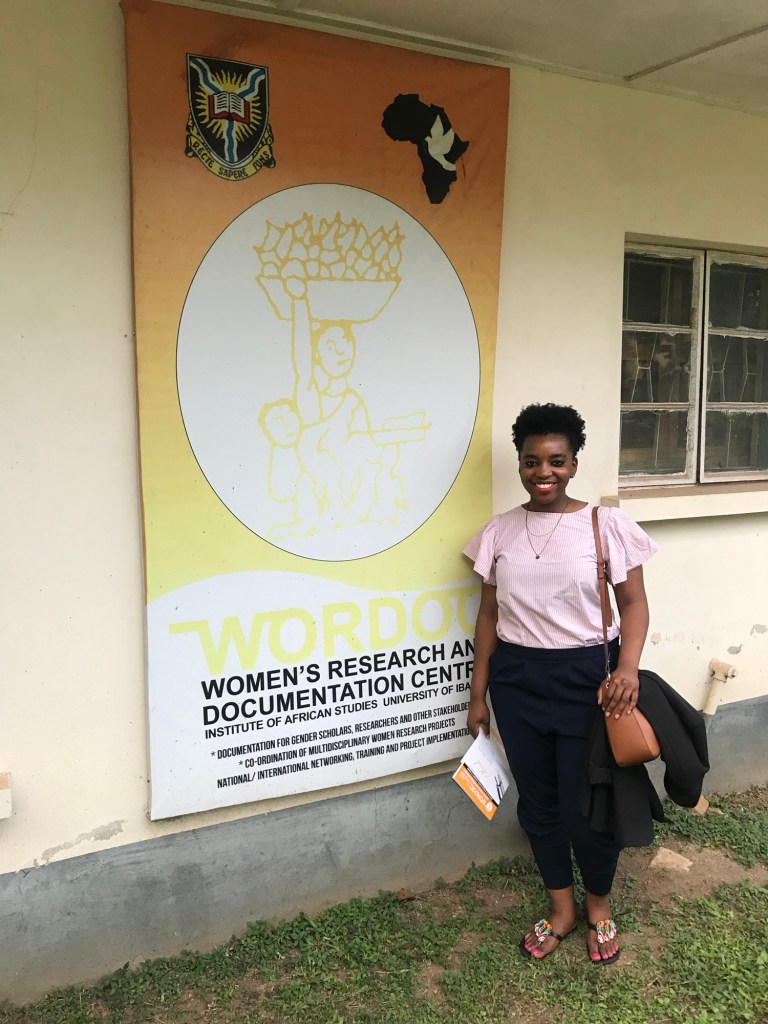
This year marks ten years of working in the social development sector, after leaving the legal profession in December 2014. Reflecting on the last decade of my professional journey through the lens of my father’s legacy has given me new eyes to see the coat of many colours that God has been stitching for me, both across space and time.
Initially, becoming a lawyer was my father’s dream for me. It only became possible because he spoke it into existence in that “Let there be…” fashion makers do. So that in the end, we dreamed the dream together. The beautiful thing about creative collaboration is that each maker’s voice shapes new possibilities. My father and I did not know what we would ultimately create with our song, but there were some key moments that signaled tangled ends.
In Grade 10, I dropped Biology for History and Speech and Drama. I intended for this to be my quiet declaration that I would not be following in my parents’ footsteps and pursuing a career in the Health Sciences. My Dad acquiesced because I continued with Mathematics and Physical Science. In other words, I was not entirely ruining my life. When I reached university, I did not register for a Bachelor of Laws (LLB) degree at the outset, as my Dad imagined. Instead, I registered for a Bachelor of Arts (BA) degree, majoring in Law and the Humanities. I argued that, by combining it with other social science subjects, I would be enriching my understanding of the law. Besides, I would still complete my LLB after graduating. My Dad appreciated my reasoning. His own practice of medicine was grounded in an ethic of care, which recognised that improved health outcomes rely on interdisciplinary and intersectional approaches.
The scratch in our vinyl came when I decided to quit my job as a Candidate Attorney to pursue…
BLANK!
There was a crackle…a stutter in time…an audible skip across the groove.
It makes me giggle now to think of that period of “crisis-of-purpose” because when I look at who my father was, and the patterns of his life, one could say that my own path was inevitable.
My Dad was born in the early 1950s in a small mining town called Barberton, which lies in the south-eastern parts of the Mpumalanga province. Barberton is fringed by the Makhonjwa Mountains, which are known to contain the world’s oldest rock formations, dating back 3.5 billion years. The ancient volcanic and sedimentary rocks are said to hold the earliest evidence of the formation of continents and the origin of life on Earth. For this reason, they are often referred to as “the Genesis of Life”. I find it rather poetic that this ancient dust is the breath of my family’s beginning.
My Dad completed his primary and secondary schooling in his rural hometown of Sihlangu, which is part of the Nkomazi Region (known during Apartheid as the Kangwane Homeland). After obtaining his Junior Certificate at Nkomazi High School, he left home to join Adams College in Amanzimtoti, Kwa-Zulu Natal, where he enrolled for a pre-Matric special course in Mathematics and Physics.
Established in 1853, Adams College is a historic Christian mission school, which became the second oldest institution for Black people in South Africa. The school prides itself on educating some of Africa’s most influential people, including: Chief Albert Luthuli (leader of the African National Congress (ANC) and Nobel Laureate); Enoch Dumbutshena (Zimbabwean Chief Justice and first Zimbabwean judge of African descent); Es’kia Mphahlele (writer and activist); John Langalibalele Dube (essayist, novelist, philosopher and founding president of the ANC); Todd Matshikiza (jazz pianist, composer and journalist), Dr ZK Matthews (anti-Apartheid activist, lawyer and academic), and several African presidents, amongst others.
In 1973, my Dad matriculated from Adams College with a First-Class pass. He also held the eighth position as one of the best matriculants in the country. After this, he went on to Edendale Vocational College in Pietermaritzburg, where, in 1977, he qualified as a Medical Technologist. It was at this stage that my Dad returned to Nkomazi, together with his beautiful wife–a gem he found in Kwa-Zulu. I have so much to say about my Mom (and her brilliance), but that is an essay for another day.
My Dad became the first Medical Technologist to oversee the hospital laboratory at Shongwe Hospital. In 1980, he isolated the first known case of vibrio cholera in an admitted patient. This case marked the beginning of a larger nationwide cholera epidemic in South Africa, which lasted until 1987. In 1981, my Dad decided to pursue a degree in Medicine. He was first admitted to the University of the Witwatersrand (Wits). However, he ended up leaving the institution in 1983 to continue his studies at the Medical University of Southern Africa (MEDUNSA) in Pretoria. He qualified with his Bachelor of Medicine and Surgery (MBBCh) degree in 1988.
I don’t remember many things from the day of my Dad’s funeral, but one of the things that has stayed with me is what his friends recollected about their early conversations regarding their futures as newly qualified Black South African doctors. While most of his classmates expressed their desire to remain and build their lives in the city, my Dad said that he would return to the “homelands”. The Apartheid homelands were underdeveloped areas in South Africa where Black people were stripped of their citizenship and forced to live under impoverished conditions, as part of the government’s grand strategy for separate development. My Dad felt strongly that this is where his skillset was needed most.
This is how my Dad came to establish his home and private practice in Elukwatini—about an hour’s drive from Barberton. In 1990, he became the first General Practitioner in the area and he served the entire community of the Chief Albert Luthuli municipality, and surrounding areas, for over three decades.
I was listening to a podcast recently where Oprah was responding to an audience member’s question about finding her life’s purpose. She quoted Martin Luther King, who said:
“Not everybody can be famous, but everybody can be great because greatness is determined by service…you only need a heart full of grace and a soul generated by love”.
For over thirty years, my Dad accorded dignity, empathy, compassion and generosity to every person who sought healing through his hands. He lived his life in service. I have since learned about the blessing and burden of being a healer in a place of inherent systemic marginalisation and exclusion. The toll was excruciating, but I see now that it was worthwhile. Many of my Dad’s patients visited us after his passing. They mourned; we comforted them. In the end, I embraced this—it’s what happens when you lose umuntu obengumuntu ebantwini.
As an example of a Black professional building a life in South Africa, my Dad is my beacon. Heart full of grace—soul generated by love.
When I am at home in Elukwatini, I have a full view of the Makhonjwa Mountains. Their peaks rise like shadows against the orange-purple horizon, circling the arena where I stand. Faced with the history of my Dad’s beginning—my ancestors’ beginnings—I realise that my life and work must be concerned with bigger questions. In the early years after pivoting my career, I may have called my choices a kind of professional meandering. But against the backdrop of the story of my family, these choices are nothing less than strategic alignment.
I am exactly who I was meant to be.
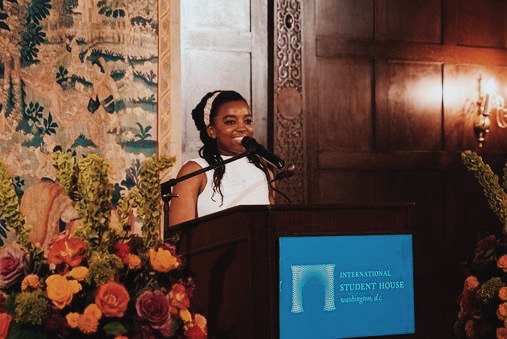
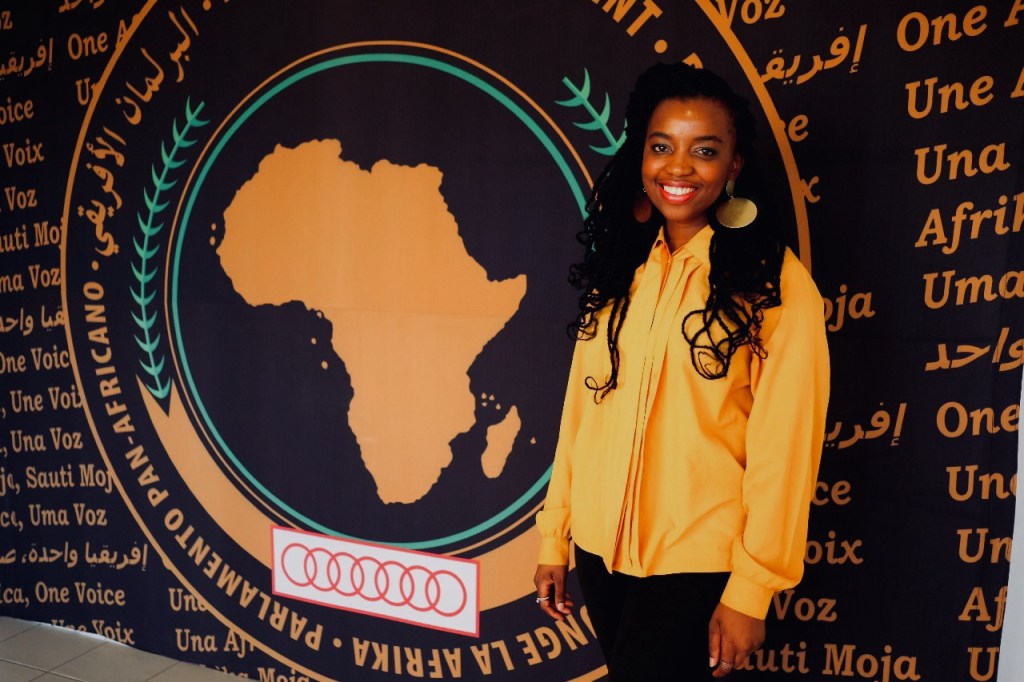
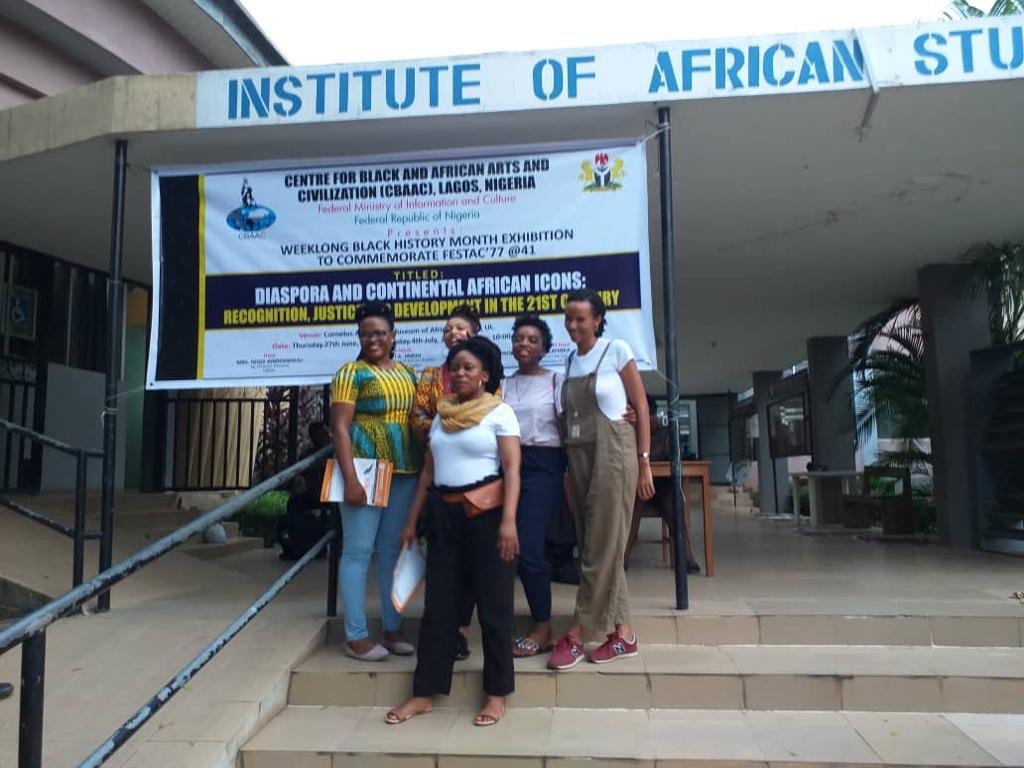
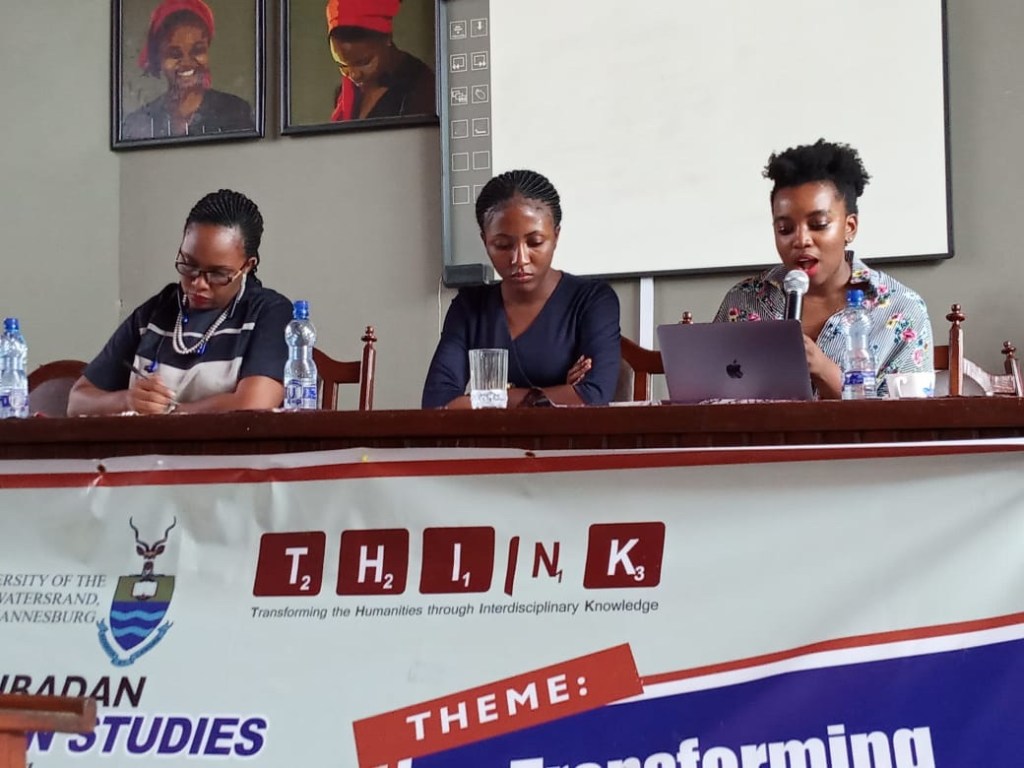
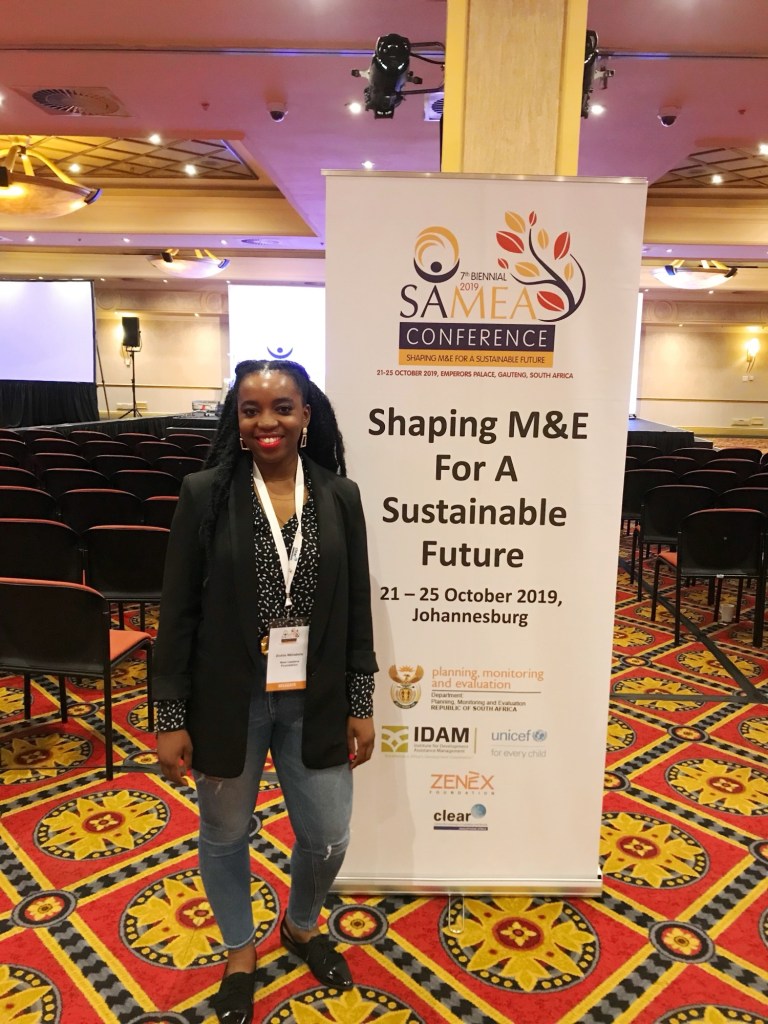
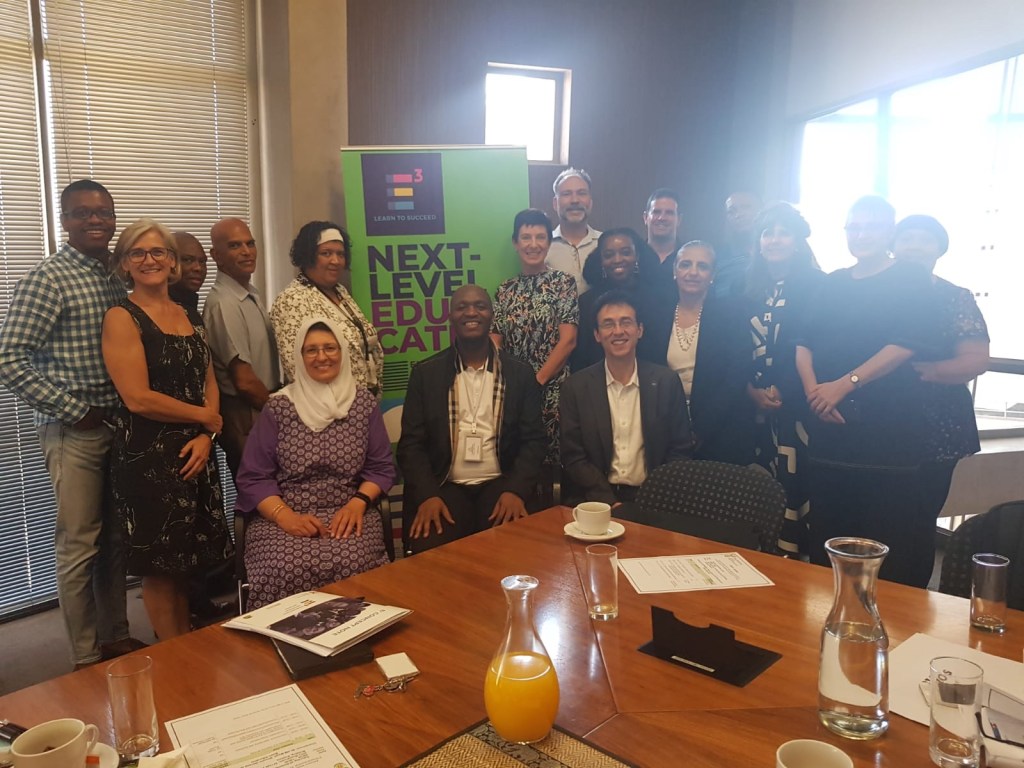
And after ten years of sharpening my tools as a teacher, researcher and learning and evidence practitioner, I no longer apologize for demanding space to think seriously and critically about my work and contributions. I imbue my work with thoughtfulness and an understanding that social change is as much about who counts and how we know,as it is about what we do. No interventions are neutral—each reflects a specific set of values, assumptions and dynamics of power, which determine what and who is left unseen. In translating ideas to impact—developing evidence-based strategies, designing and implementing development programmes and building systems that connect data and evidence with decision-making—I have mastered the art of making the unseen visible. It’s demanding work—more so when you are young, Black and female. But, the work is worthwhile.
I am proud of who I am—proud of the way I work and the way I live. I sing Nina Simone’s declaration often:
“When you’re young, gifted and Black, your soul’s intact”.
Our souls are intact.
After ten years, I have no pithy lessons to share with you—just my Dad’s story, which is mine…and ours. I will continue to sprinkle it everywhere I go, like a gentle wind blowing ancient dust from the oldest mountains on the planet.
I will continue to try because trying is holy. As uNomzamo, Toni Morrison’s words have become my quiet manifesto:
“…the grandeur of life is that attempt. It’s not about that solution. It is about…being as fearless as one can and behaving as beautifully as one can under completely impossible circumstances—it’s that that makes it elegant…Good is just more interesting, more complex, more demanding…survival, blossoming, endurance—those things are more compelling intellectually, if not spiritually.
We are already born. We are going to die. So, you have to do something interesting that you respect in between.
I am only just beginning.
 BRAVE BROWN WONDER
”After ten years, I have no pithy lessons to share with you—just my Dad’s story, which is mine…and ours. I will continue to sprinkle it everywhere I go, like a gentle wind blowing ancient dust from the oldest mountains on the planet.” #Legacy
Beautifully written and shared, Zinhle.
LikeLike